
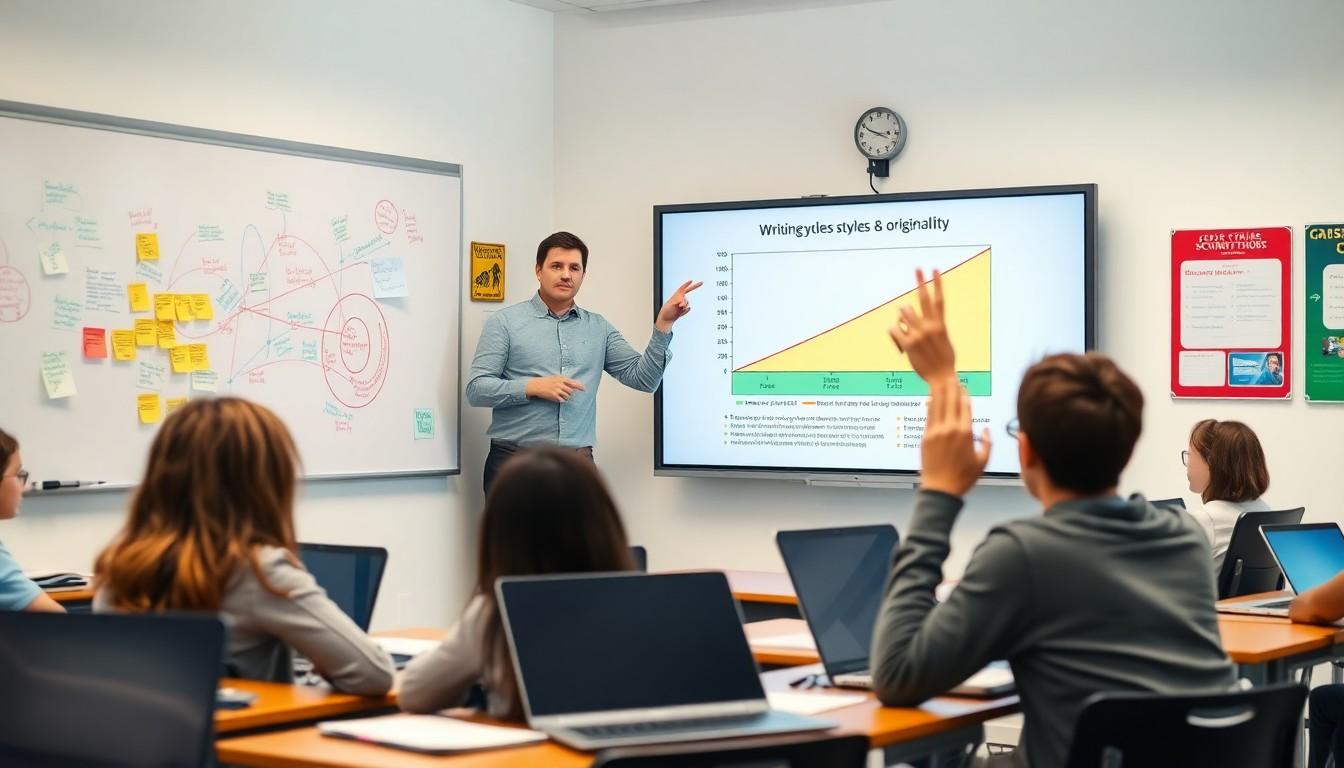
In the age of AI, students are finding clever ways to get their homework done faster, and ChatGPT is the secret weapon of choice. But while it might seem like a magic wand for writing, teachers are no dummies. They’ve got their own tricks up their sleeves to sniff out AI-generated content.
Imagine handing in an essay that sounds like Shakespeare after a caffeine binge. Your teacher might just raise an eyebrow and think, “Did they really write this?” From uncanny language patterns to a lack of personal flair, there are telltale signs that scream, “I didn’t do this myself!” So, before hitting that submit button, it’s worth diving into how educators can spot the handiwork of AI and save yourself from an awkward conversation about originality.
Understanding ChatGPT
ChatGPT, an AI language model, generates text based on user prompts. This tool analyzes vast amounts of data to create coherent responses. Its versatility allows students to compose essays, generate ideas, and draft reports. However, reliance on AI can lead to challenges in academic integrity.
Indicators of AI-generated content are becoming clearer. Phrasing often lacks the nuanced personal touch typical in student work. Recurring themes emerge, reflecting common data sources instead of individual thought. Sentences may exhibit unnatural structure or overly formal language.
Observing consistency in tone and style gives teachers insight into authorship. Comparisons between student submissions and past work reveal disparities. Familiarity with a student’s voice helps educators identify deviations. Unique expressions or opinions might signal a human author, while generic statements indicate AI usage.
Understanding the underlying patterns in writing helps highlight AI’s limitations. ChatGPT struggles to incorporate real-life experiences or emotions. Teachers value authentic narratives, which AI cannot authentically replicate. Critical thinking and personal insight remain essential for compelling writing.
Students must integrate their voices and perspectives into assignments. Distinguishing their unique style from AI’s output decreases the chance of detection. Emphasizing originality and personal expression drives engagement with course material. As technology evolves, awareness of these aspects ensures academic honesty.
Teacher Awareness of AI Tools

Teachers increasingly recognize AI tools like ChatGPT in student submissions. They employ various strategies to identify signs of AI-generated content effectively.
Common Signs of AI-Generated Content
Patterns such as repetitive phrasing and unnatural tone often indicate AI involvement. A lack of personal anecdotes can make the work feel generic. Sentences might show an overly formal structure, deviating from a student’s typical writing style. Another common indicator is the absence of emotional depth, which personal narratives usually convey. Teachers note how AI-generated text lacks unique voice, making it easier to spot.
Observational Techniques for Teachers
Teachers utilize various observational methods to discern authorship. Comparing recent submissions with a student’s prior work reveals inconsistencies in style and tone. They actively look for deviations in vocabulary, considering whether the language aligns with known student capabilities. Using software tools for text analysis aids in detecting AI influence. Engaging in conversations with students about their work helps clarify any uncertainties regarding originality.
Challenges in Detection
Detecting AI-generated content presents various challenges for educators. Traditional assessment methods often lack the sensitivity needed to pinpoint discrepancies in student submissions.
Limitations of Traditional Assessment Methods
Standard grading practices focus heavily on surface indicators like grammar and structure. Relying solely on these elements can obscure realities about authorship. Students may produce text that is technically correct but lacks personal voice and emotional depth. Using rubrics, educators might miss subtle shifts in tone that suggest external assistance.
Monitoring changes in writing style offers some insight, yet it can be difficult without robust documentation of a student’s progress over time. Assessments may not account for creativity or individuality, both crucial in subjective tasks. Relying on conventional assessments can result in overlooking the nuanced differences between a student’s organic work and AI-generated outputs.
The Role of Educational Integrity
Educational integrity stands central in maintaining a fair learning environment. Adherence to integrity promotes originality and authentic expression in academic work. Students relying on AI tools like ChatGPT often miss the opportunity to develop their writing skills. Personal reflection and individual insights greatly enhance assignments, fostering deeper engagement with course material.
Detection strategies empower teachers to identify AI-generated content. Anomalies in writing style signal potential issues regarding authorship. Inconsistent tone and repetitive phrases raise red flags during evaluations. Teachers often compare submissions with previous works to spot divergences. Observational techniques become essential in these scenarios.
Encouraging students to voice their unique perspectives strengthens their academic integrity. Personal anecdotes and real-life experiences enrich written work, making it more reflective of individual thought processes. Educators emphasize the importance of originality as technology evolves. Students should embrace their narratives and avoid the pitfalls of overly polished AI-generated text.
Challenges in upholding academic integrity arise as AI continues to advance. Traditional evaluation methods often overlook personal voice and emotional depth. Assessments that focus solely on structure can obscure authentic authorship. Creativity and individuality play vital roles in subjective tasks but may become diluted with AI assistance.
Dialogue around integrity fosters a culture of honesty and responsibility in education. Open discussions between teachers and students clarify expectations regarding originality. Ultimately, prioritizing educational integrity enhances both the learning experience and students’ development as thoughtful, engaged individuals.
Understanding the nuances of AI-generated content is crucial for both students and educators. As reliance on tools like ChatGPT grows the ability to recognize its limitations becomes essential. Students should embrace their unique voices and experiences in their writing to maintain authenticity and originality.
Teachers play a vital role in fostering academic integrity by employing various detection strategies and promoting open conversations about originality. By prioritizing personal expression and engaging with course material students can enhance their learning experiences while ensuring their work reflects their true capabilities. As technology continues to evolve maintaining a balance between innovation and integrity is key to a meaningful educational journey.